
Introduction
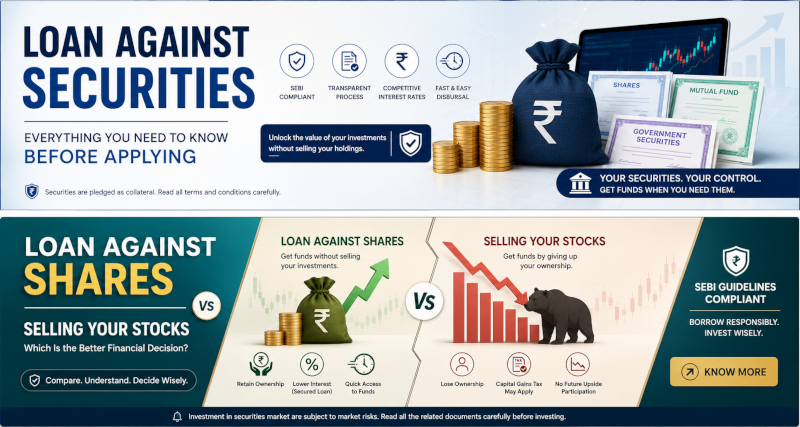
A Loan Against Securities (LAS) allows eligible borrowers to pledge approved securities such as shares, mutual funds, ETFs or bonds to obtain funds without immediately selling their investments. This article explains how LAS works, eligibility, benefits, risks, documentation, margin calls and important SEBI-related considerations before applying.
What is a Loan Against Securities?
It is a secured loan where approved securities are pledged as collateral. Ownership generally remains with the borrower while the pledge exists, subject to lender terms.
How Does It Work?
Complete KYC, pledge eligible securities, lender evaluates the collateral and sanctions a loan based on the applicable loan-to-value ratio. Funds are disbursed after pledge confirmation.
Benefits
Continue holding investments, competitive interest rates compared with unsecured loans, faster processing and flexible repayment options depending on the lender.
Risks
Market volatility may trigger margin calls. Failure to maintain margins or repay dues can result in liquidation of pledged securities as per the loan agreement.
SEBI-related Considerations
Read the loan agreement carefully, understand eligible securities, LTV limits, pledge mechanism and margin requirements. Always follow applicable SEBI regulations and lender policies.
Disclaimer
This article is for informational purposes only and should not be construed as financial, investment, legal or tax advice. Loan eligibility, LTV, interest rates and terms vary by lender.